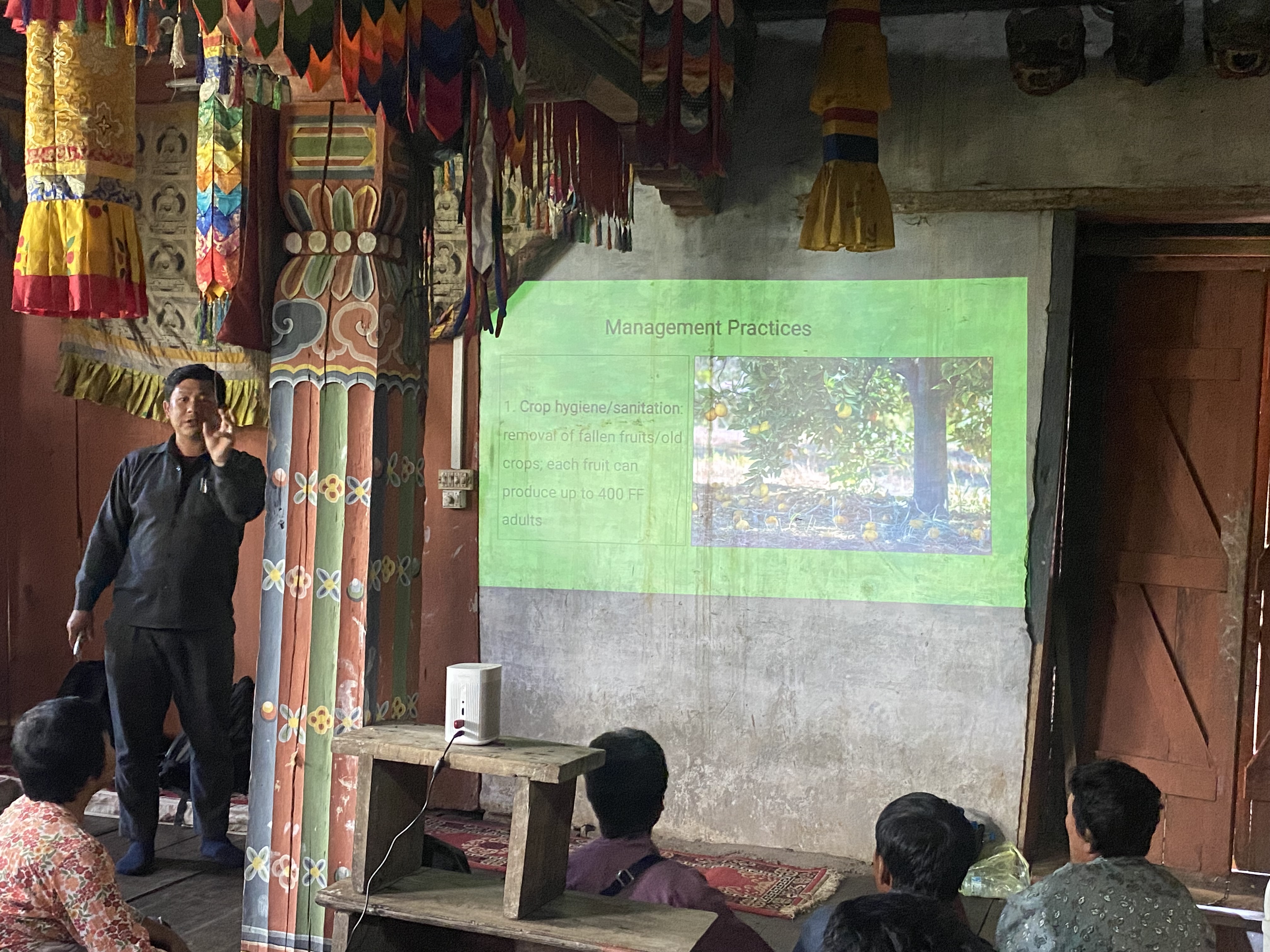
 In June 2026, a series of community-based Citrus Fruit Fly Management Training and awareness campaigns were conducted in Baeyul Kuenza and Meritsemo under Bongo Gewog, Chhukha Dzongkhag, and in Ngatsena-Putsena and Dorithasa villages under Gakidling Gewog, Haa Dzongkhag. Around 158 farmers have participated in this activity. The activities were implemented with financial support from the World Bank-funded RNR-JOB Project (Citrus Commodity) in close collaboration with the Agriculture Sector of Chhukha and Haa Dzongkhags. The intervention was designed to address one of the most critical production constraints affecting Bhutan’s citrus industry, namely the Chinese Citrus Fruit Fly (Bactrocera minax), which is responsible for severe fruit damage and substantial yield losses in major citrus-growing areas.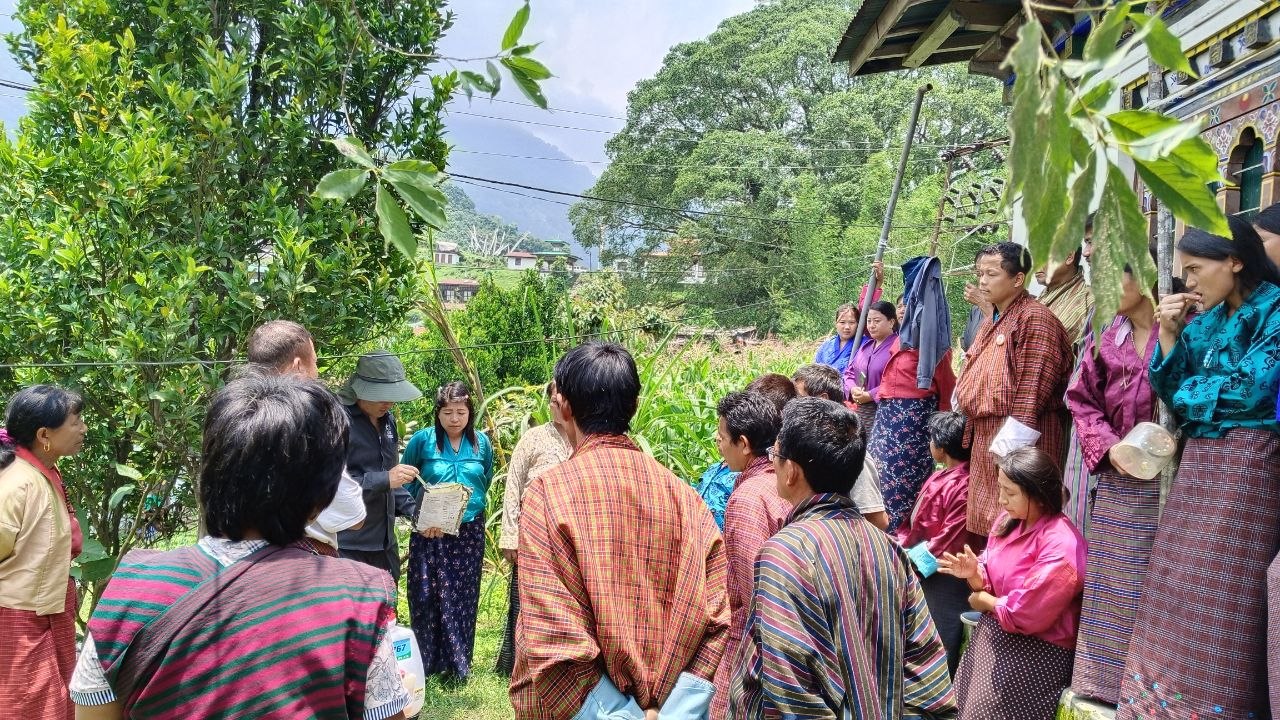
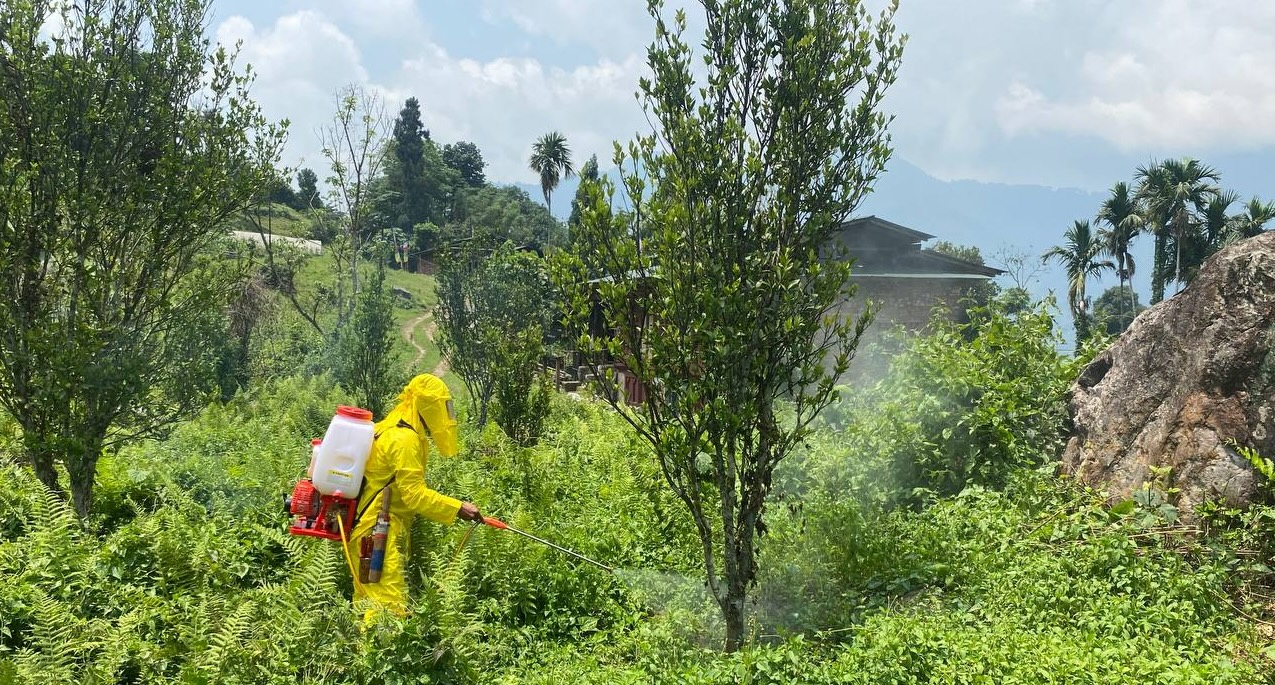
The program focused on enhancing farmers’ knowledge and technical skills on the biology, life cycle, economic significance, and integrated management of the pest. Particular emphasis was placed on the importance of synchronized and community-wide implementation of management measures to effectively suppress fruit fly populations. Farmers were trained on key components of integrated pest management, including orchard sanitation through regular collection and deep burial of infested fruits, winter soil cultivation to expose overwintering pupae, preparation and application of protein bait sprays, and timely chemical control measures based on the pest’s life cycle. In addition, awareness was created on the safe and judicious use of pesticides, emphasizing adherence to recommended dosages, use of appropriate personal protective equipment (PPE), and environmentally responsible handling and disposal practices to minimize risks to human health and the environment.
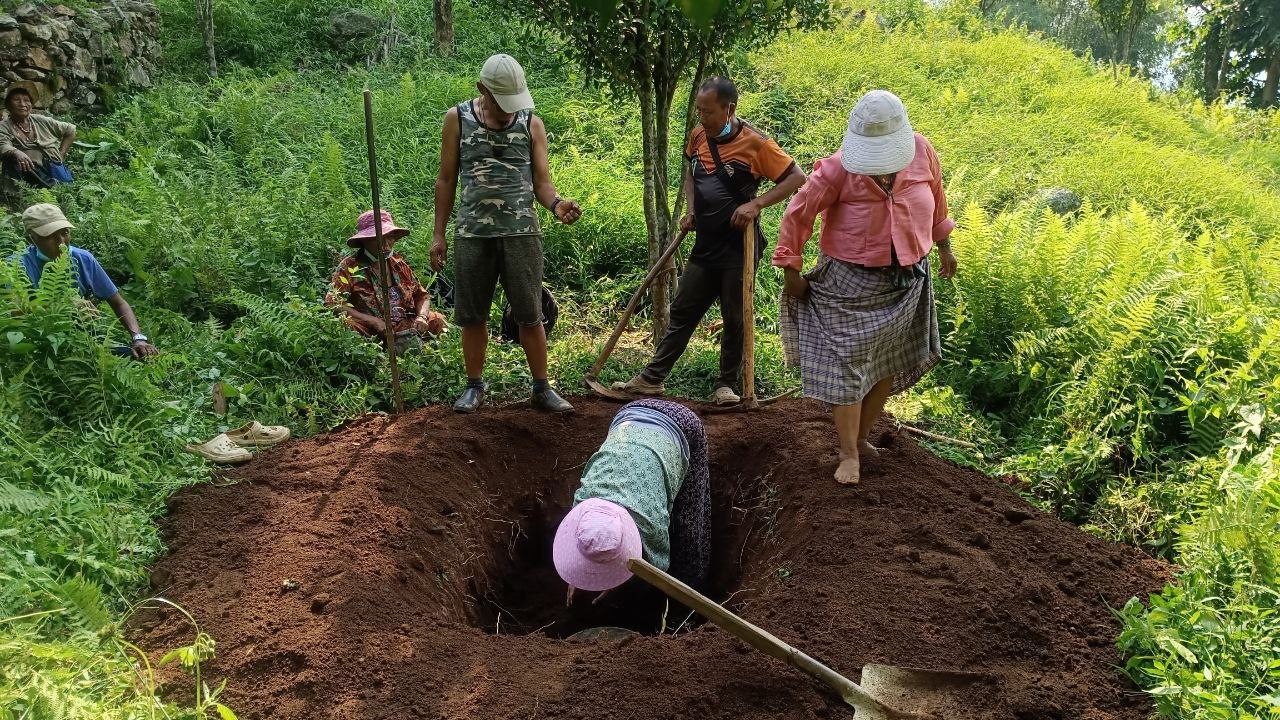 The participatory nature of the program facilitated active engagement and experience sharing among farmers, thereby fostering collective action and strengthening community ownership of pest management interventions. Farmers demonstrated improved understanding of the pest and expressed willingness to adopt the recommended practices in a coordinated manner with neighboring orchard owners. Overall, the intervention significantly strengthened farmers’ capacity for sustainable citrus production and promoted area-wide pest management approaches. The adoption of these practices is expected to contribute to reduced fruit fly incidence, lower production losses, improved fruit quality, enhanced orchard productivity, and increased income opportunities for citrus-growing households, thereby supporting the long-term sustainability and competitiveness of Bhutan’s citrus sector.
Tshering Dorji
Horticulture Program
206 total views, 3 views today