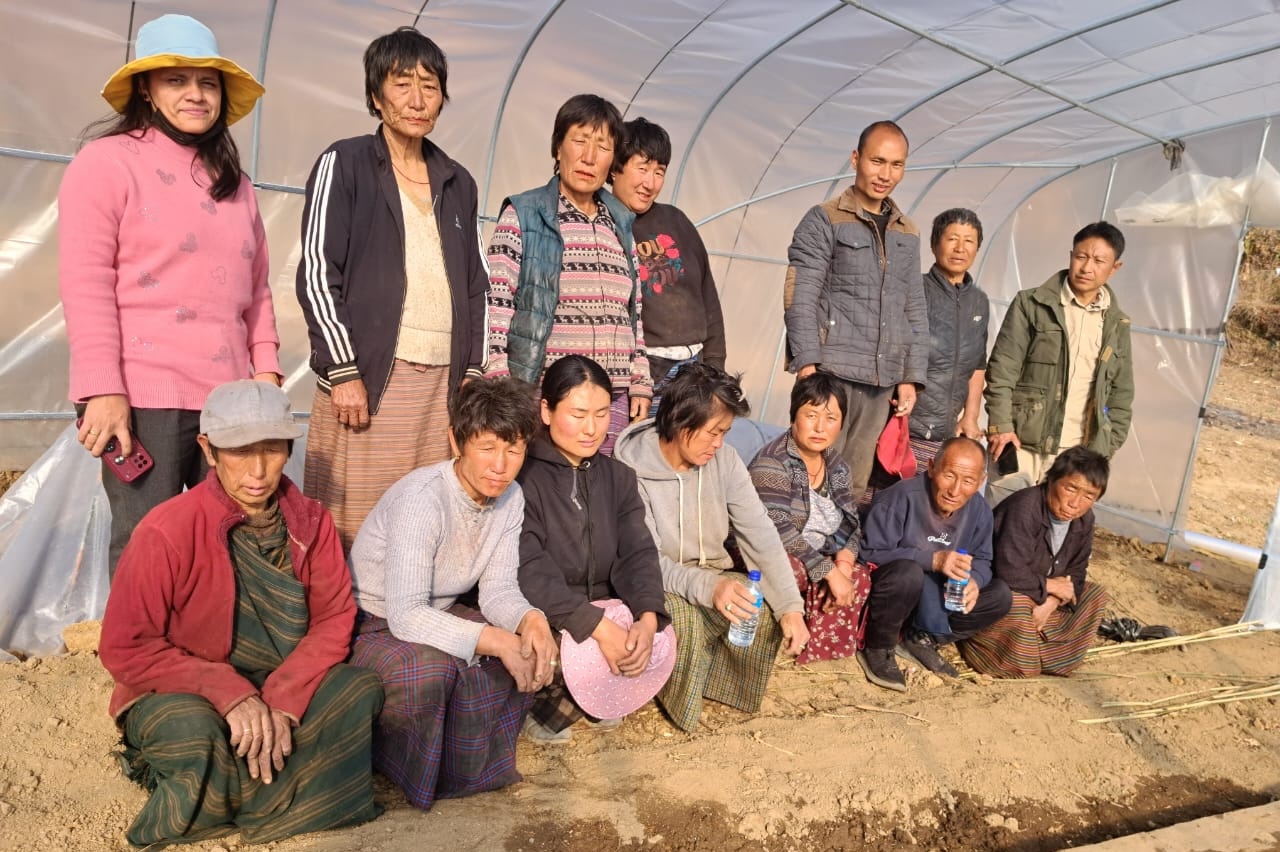
As a part of the FAO-supported agricultural development initiative,13 polyhouses were distributed to the selected farmers in Bunagu, Chapcha gewog in Chhukha Dzongkhag. Bunagu village lies at an elevation of 2147 masl. The key objective of the intervention is to promote climate smart vegetable production and improve household incomes. Before this intervention farmers had never cultivated tomatoes under protected conditions. Tomato cultivation was limited to open field cultivation which was often affected by heavy rainfall, pests, diseases and fluctuating temperatures resulting in poor yields and profitability.
Tomato is one of the widely cultivated and consumed vegetable crops globally. It is one of the most important additive vegetables in Bhutanese dish. In Bhutan tomatoes are cultivated in limited areas. Since the production is considered deficit as per the vegetable production analysis of the Department of Agriculture, MoAL, it is selected as a priority crop for the 13th FYP in Bhutan. Bhutan has potential for year-round production of tomatoes with appropriate technology and production practices. The research conducted at NCOA indicates higher yield from tomato cultivated under protected structures.
Following the distribution of polyhouses, with technical support from NCOA, Yusipang, farmers received hands-on training on nursery raising, management, transplanting, irrigation pruning, staking, integrated pest management and nutrient management. With proper training and guidance and infrastructure the farmers successfully cultivated tomatoes inside the polyhouses for the first time.
The results exceeded expectations. Each polyhouse measuring 5 m x 20 m (100m2) accommodated around 400 plants. The variety selected was cosmic which is a hybrid variety with high yield. On an average, each plant produced 4-5 kgs of marketable tomatoes resulting in an estimated yield of 2MT per polyhouse. With 13 polyhouses, the village will be able to produce an estimated 26 MT of tomatoes for the year if there is no loss to disease and pest. Farmers sold fresh tomatoes in nearby markets at an average farm gate price of Nu. 50 per kilogram.

Beyond increased income, the cultivation of tomatoes also improved household nutrition by providing a regular supply of fresh tomatoes for family consumption. Farmers also gained confidence in protected cultivation techniques and recognised the advantages of polyhouses including reduced pest and disease incidence, better fruit quality, extended harvesting periods and year round production opportunities.
One beneficiary Mrs. Tshering Dema said, “This was the first time I grew tomatoes inside a polyhouse. Initially I was uncertain about the technology , but after seeing the healthy crop and good market price , I realized its potential. The income has helped my family meet household expenses and next season I plan to continue tomato cultivation under polyhouses.”
Despite the successful tomato production, the cultivation process was accompanied by various challenges including pest infestation like fruit borer, birds and disease outbreaks like blight and blossom end rot. Through proper crop management and timely intervention with support from geog agriculture extension , these challenges were effectively addressed contributing to the overall success of the production.
By: Madhu Devi Baniya, Horticulture Program
827 total views, 2 views today